
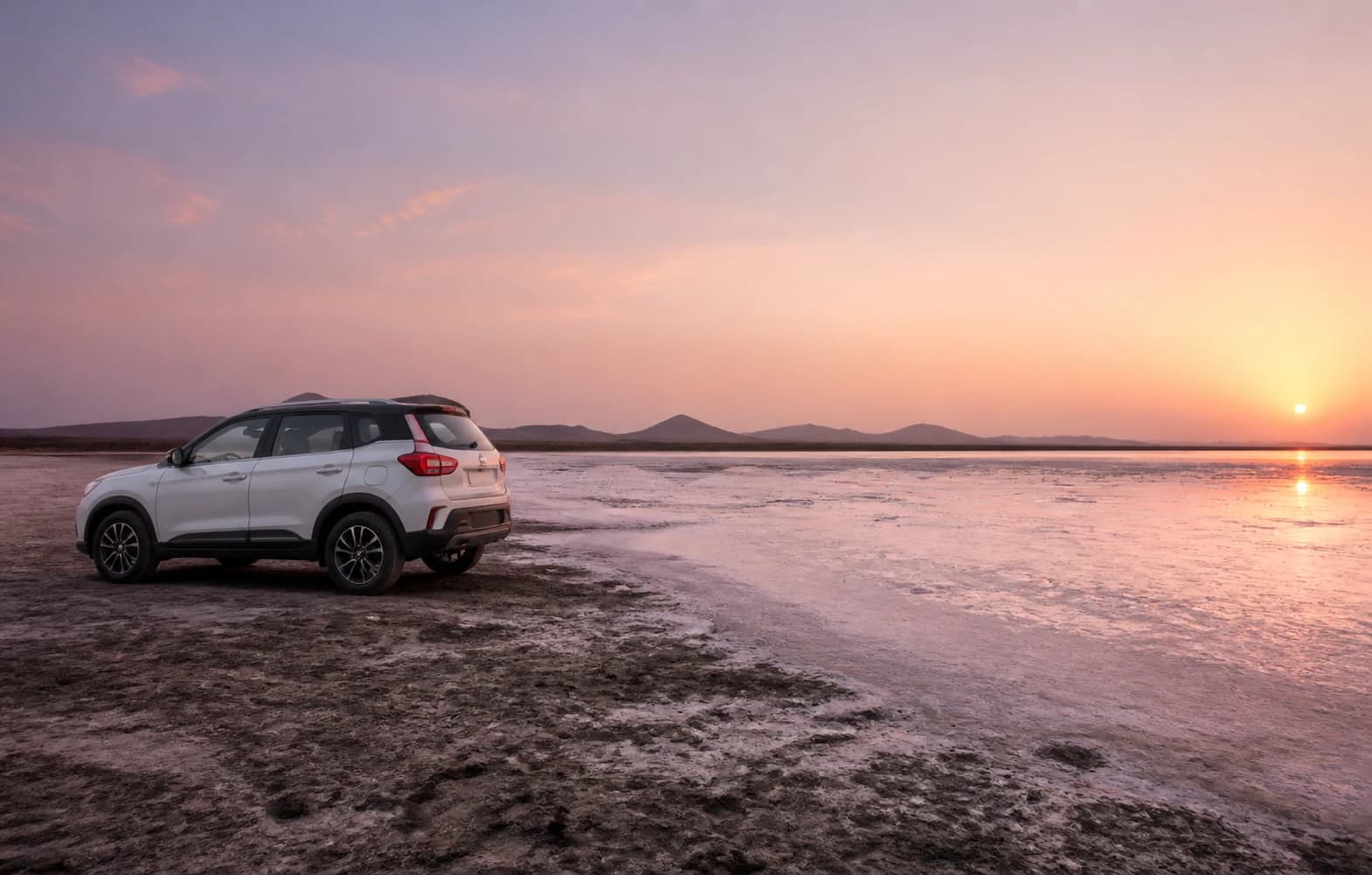
Quick summary for drivers:
- Drive 80 km west from Jaipur via NH48 (Ajmer Highway) through Dudu or via Jobner for a 1.5 to 2-hour journey.
- The dry winter season (October to March) offers firm salt beds ideal for vehicle photography and star-gazing.
- Rent high-ground-clearance SUVs or 4x4 vehicles like Mahindra Thar or Scorpio N to navigate sandy lake approaches safely.
- Never drive into damp, marshy lake patches where heavy vehicles can sink into disguised soft mud.
Spanning over 190 square kilometres across Jaipur, Nagaur, and Ajmer districts, Sambhar Salt Lake is India's largest inland saline body. Its endless white horizon, historic salt trains, flocking migratory flamingos, and cinematic sunsets make it Rajasthan's most surreal self-drive road trip destination, just 80 km from Jaipur.
Best Driving Routes from Jaipur to Sambhar
There are two primary driving routes connecting Jaipur to the salt lake:
• Route 1 (Via NH48 / Dudu - Recommended): Jaipur -> Bhankrota -> Dudu (turn right at Dudu town) -> Sambhar Lake. Distance: 85 km. Driving Time: 1 hour 45 minutes. Roads are broad 6-lane NH48 followed by smooth 2-lane state highways.
• Route 2 (Via Jobner): Jaipur -> Kalwar Road -> Jobner -> Sambhar Lake. Distance: 72 km. Driving Time: 2 hours. Scenic rural route with mustard fields, best for morning drives.
| Attraction / Landmark | Location on Lake | Highlights & Best Time | Vehicle Suitability |
|---|---|---|---|
| Shakambhari Devi Temple | Southern Shore | Ancient 6th-century shrine, panoramic lake lookout | All cars (paved road) |
| Salt Train Tracks & Brine Wells | Sambhar Heritage Circuit | Historic narrow-gauge salt trains, photography spot | All cars |
| Open White Salt Flats | Dry lakebed boundaries | Cinematic drone shots, sunset view, 360-degree horizon | 4x4 / SUVs only |
| Flamingo Viewpoint | Wet marsh periphery | Winter migratory birds, peaceful sunrise spot | Hatchbacks & SUVs |
Essential Rules for Driving on Salt Flats
Driving on Sambhar Lake is an unforgettable experience, but caution is paramount:
1. Inspect the Ground First: The lake surface often forms a thin dry salt crust over deep wet mud. Always walk a few steps to test ground firmness before driving your vehicle forward.
2. Stick to Established Tracks: Follow existing tire tracks left by local tractors and rangers rather than venturing into unexplored glistening patches.
3. Wash the Underbody Post-Trip: High salt concentration can accelerate corrosion on car undercarriages. At Financer, our vehicles receive an anti-rust underbody wash after every Sambhar return.
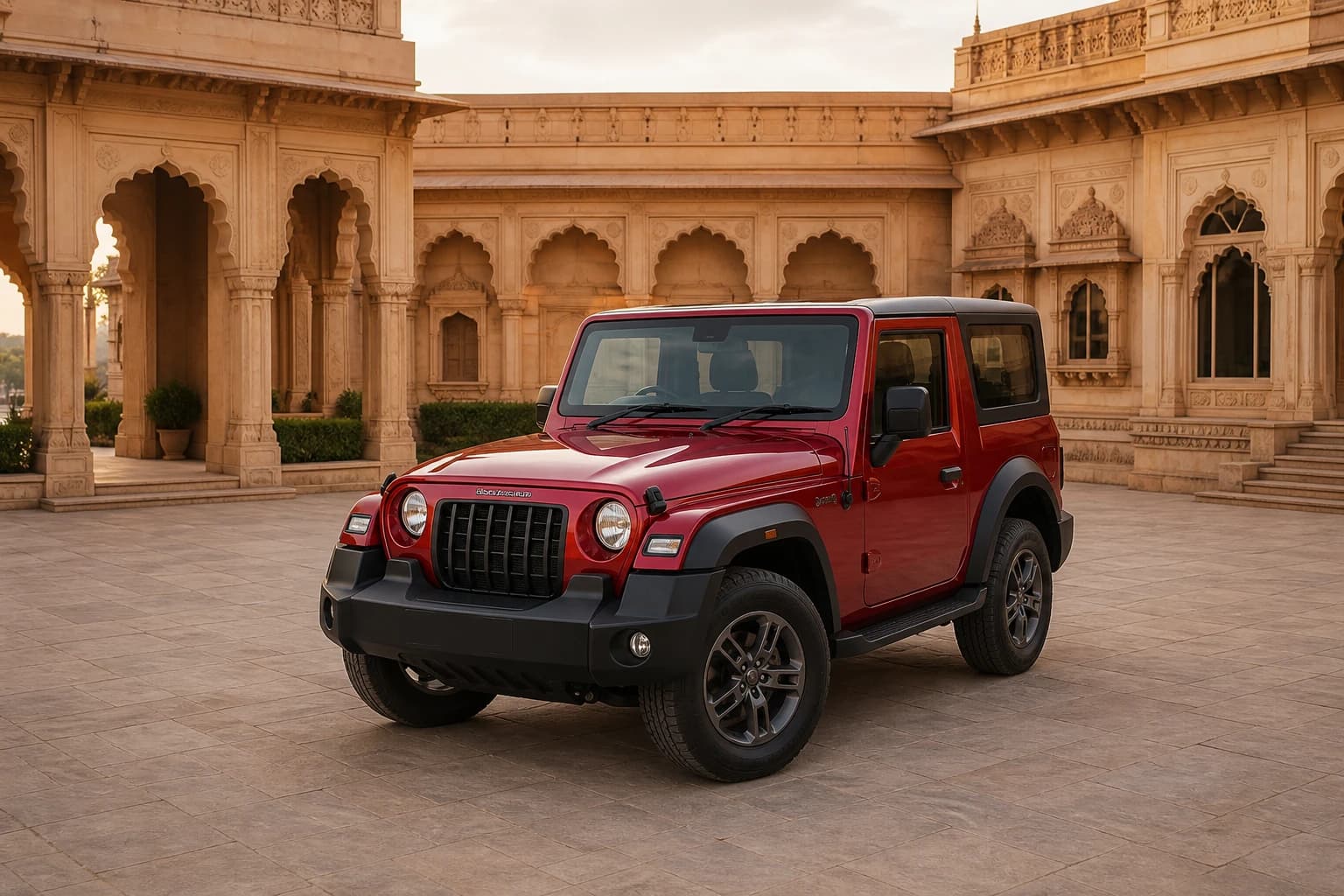
4. 4x4 Advantage: Renting a 4-wheel-drive Mahindra Thar gives you low-range gearing, all-terrain tires, and the torque needed to easily maneuver loose sand banks.
Mobile signals become weak on the vast lakebed. Ensure you return to paved village roads before total darkness falls around 7:00 PM.
Recommended Cars for the Sambhar Expedition
• Mahindra Thar 4x4 (Hard Top / Convertible): The undisputed king of Sambhar. Massive 226 mm ground clearance, mechanical 4WD lock, and unbeatable photo appeal against the white horizon.
• Mahindra Scorpio N: Heavy-duty ladder-frame chassis with robust suspension to absorb sudden bumps on unpaved gravel trails.
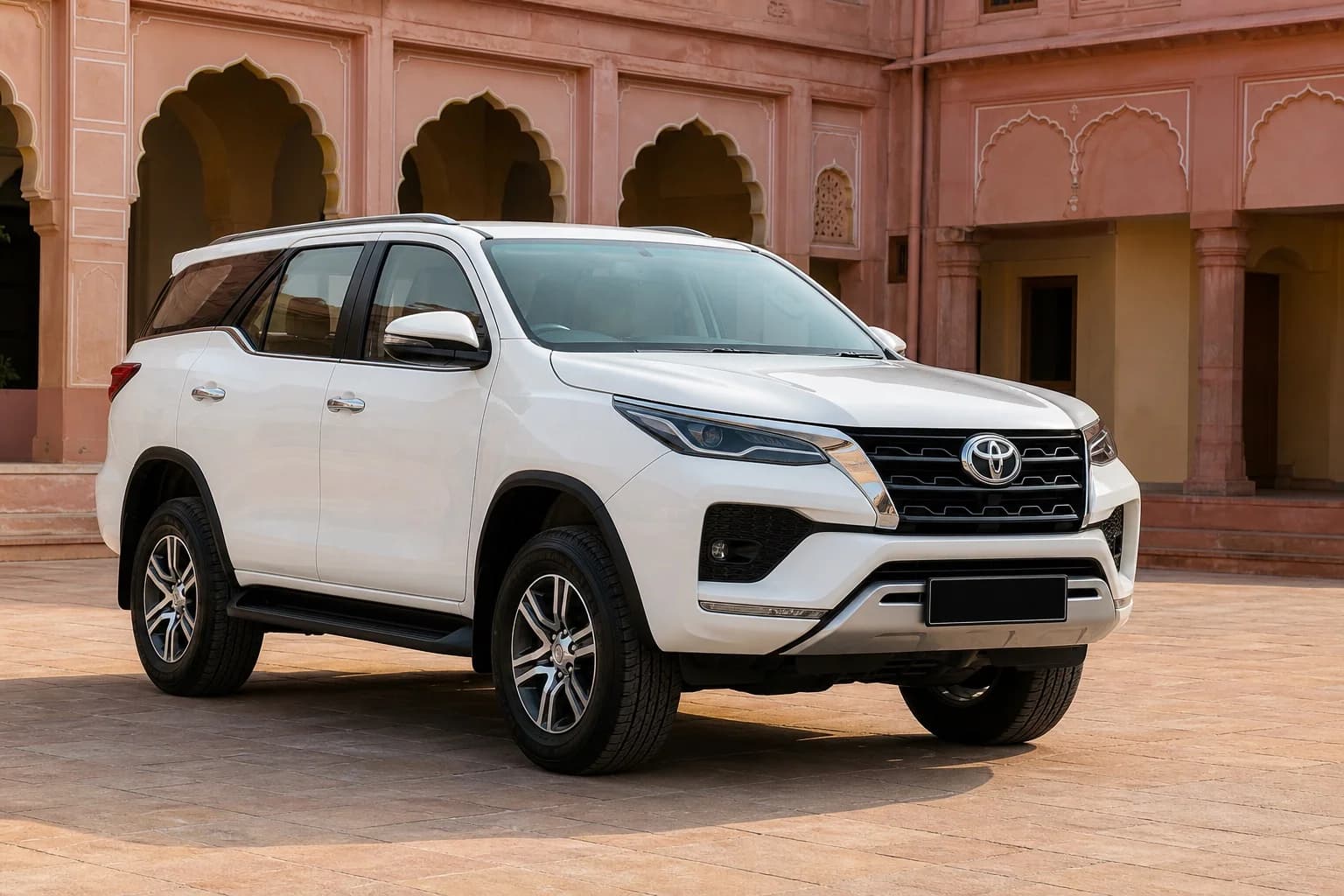
• Toyota Fortuner: Ample power, unmatched water/sand wading capacity, and spacious comfort for family camping equipment.
Recommended self-drive cars.
Every vehicle listed covers 24 hours with 300 km included, FastTag and 24×7 breakdown support.


Common questions about this guide.
Is driving on the Sambhar lakebed permitted?+
Driving on dry peripheral trails and designated access roads near Shakambhari Temple is widely practiced. However, driving into environmentally sensitive wetland bird habitats or active salt-harvesting ponds is strictly prohibited.
What is the best time of year to visit Sambhar Lake?+
October to March is ideal. During winter, temperatures are pleasant (15°C to 25°C), the lakebed is dry and white, and thousands of migratory flamingos gather.
Can I camp overnight at Sambhar Lake?+
Several authorized luxury tented camps and eco-resorts operate around Sambhar town. For private camping, set up near village borders and seek local guidance.